
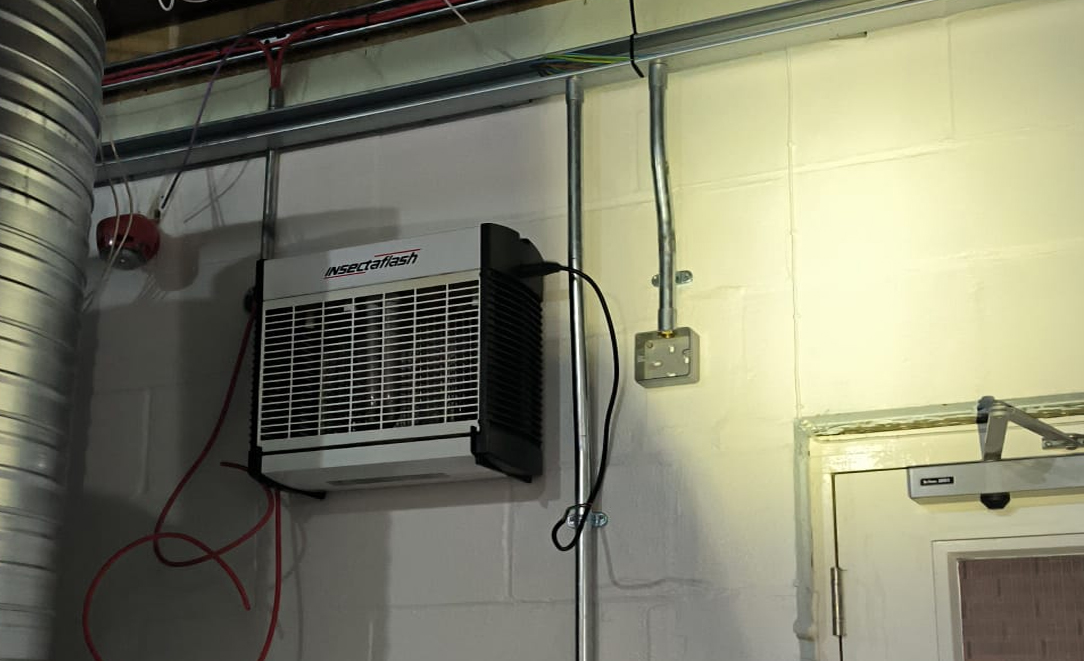
Electric insect traps—also known as professional Insect & Fly Killers—are essential equipment for maintaining hygiene and preventing contamination in food production, warehouses, restaurants, farms, and industrial facilities. Designed to attract and instantly eliminate flying pests such as flies, mosquitoes, moths, and gnats, these traps help companies meet sanitation standards and protect products, staff, and customers.
Below is a detailed guide on how industrial electric insect traps work, where to install them, and what to consider before choosing a model.
How Industrial Electric Insect Traps Work
Modern electric insect killers typically operate using one or several technologies:
1. UV-A Light Attraction
Flies and many flying insects are attracted to ultraviolet light (UV-A spectrum 315–400 nm).
Industrial traps use high-intensity UV lamps that draw insects toward the device.
2. High-Voltage Electric Grid
Once insects reach the internal grid, a safe, controlled electric discharge instantly eliminates them.
3. Glue Board Traps (Silent Models)
Some factories require quiet, hygienic solutions. Glue-board traps use UV light to attract insects, which then stick to replaceable adhesive panels.
These are ideal for food processing zones.
4. Durable Industrial Housing
Metal frames, anti-corrosion aluminum, stainless steel 304/316, and flame-resistant plastics ensure durability in demanding environments.
Benefits of Using Industrial Fly Killers
- Improves sanitation and reduces pest contamination
- Complies with HACCP, ISO, and food-safety regulations
- Reduces chemical insecticide usage (environment-friendly)
- Silent and discreet models available
- Suitable for 24/7 operation
- Covers large areas up to 200–400 m² depending on model
Where to Install an Electric Insect Trap: Expert Recommendations
Correct placement is the key to maximum performance. Below are industry-standard positioning rules.
1. Install Away From Competing Light Sources
Do NOT place traps directly near:
- windows
- open doors
- strong ceiling lamps
- production line spotlights
Bright light reduces UV effectiveness.
Ideal: dim or shaded zones where UV light becomes the strongest attraction.
2. Mount the Device at the Right Height
The general rule for fly killers:
- 1.8–2.2 meters above the floor for most industrial halls
- 1.5 meters for glue-board traps in food processing areas
- Never near the ceiling: insects fly lower and UV attraction decreases
3. Place Near Insect Entry Points (But Not Too Close)
Traps should reduce insect migration, not pull pests deeper into the facility.
Correct positioning:
- inside the entry zone 3–6 meters from doors
- near delivery/receiving areas
- next to garbage disposal areas
- near ventilation or loading docks
Incorrect positioning:
- directly above raw materials
- directly over food preparation surfaces
- right next to open doors (UV attracts insects from outside)
4. Avoid Installing Above Sensitive Products
Industrial insect traps should never be placed:
- above food
- above machinery with open containers
- above conveyor belts
- in sterile or packaging zones unless it’s a glue-board model
Electric grid traps may occasionally eject micro-particles—glue traps eliminate this problem.
5. Follow the “Insect Highway” Rule
Insects usually fly along:
- walls
- corners
- along airflow pathways
- toward light leaks
Best location: wall-mounted units 2–4 m from the floor in these “flight routes.”
Choosing the Right Type of Industrial Insect Trap
1. Open Electric Grid Units
Best for:
- warehouses
- farms
- garages
- production lines where contamination isn’t a risk
Advantages:
- high power
- effective on all flying pests
- low maintenance
2. Glue Board UV Traps (HACCP Compliant)
Best for:
- bakeries
- food packaging
- pharmaceutical facilities
- restaurants and kitchens
- supermarkets
Advantages:
- silent
- hygienic
- no insect fragments
- safe around food
3. Ceiling-Suspended Models
For areas with high ceilings (4–8 m):
- industrial halls
- large warehouses
- logistic centers
Maintenance Tips for Maximum Efficiency
- Replace UV lamps every 8–12 months (they lose up to 40% brightness even if they still work)
- Clean the trap weekly in dusty industrial areas
- Replace glue boards every 2–4 weeks or more frequently in summer
- Check the voltage grid for debris
- Ensure wiring is protected from moisture and chemicals
Safety Guidelines
- Use only models with protective grid covers
- Keep away from flammable materials
- Avoid direct exposure of UV light to workers’ eyes
- Do not install in areas with high humidity unless the model is rated IPX4 or higher
- Lockout power during maintenance
Leave a Reply